doti
डोटी

Nestled in the far-western hills, Doti carries an ancient heritage as the former seat of the Doteli kingdom. Despite its historical prominence, the district faces geographical isolation and economic marginalization, particularly affecting women and Dalit communities who navigate both traditional caste hierarchies and limited access to resources.
डोटी सुदूरपश्चिमी पहाडी क्षेत्रका डोटेली राज्यको पूर्व राजधानीको रूपमा प्राचीन विरासत बोकेको छ। यस जिल्लाका ऐतिहासिक महत्व भएतापनि, भौगोलिक अलगाव र आर्थिक पिछडापनको सामना गरिरहेको छ, जसले विशेष गरी महिलाहरू र दलित समुदायलाई असर पुर्याउँछ, जो परम्परागत जातीय व्यवस्थाहरू र सीमित स्रोत साधनको पहुँचबीच जीवनयापन गर्छन्।
Sofiya Maharjan, b. 1997 CE (2053 BS), Patan
During her travels to Badikedar and Silgadhi in Doti, Sofiya witnessed the daily lives of Dalit women, and what it means for them to work without rest, without recognition, and often without choice. She pushed herself to think beyond aesthetics, to the space where material choices became intentional, to honor the women’s stories of change not through grand gestures but in everyday acts of resilience. Through her own labor as an artist, she brings the privilege of time, freedom, and visibility to their invisible labour that sustains families yet remains unrecognized. Using textile and hand-stitching – mediums closely tied to feminine labor – she elevates domestic and craft practices into powerful visual narratives.
These are stories of women who are reshaping their worlds quietly through their choices, endurance and care.
These are stories of women who are reshaping their worlds quietly through their choices, endurance and care.
सोफिया महर्जन, जन्म सन् १९९७, पाटन, ललितपुर
डोटीको बडिकेदार र सिलगढीको यात्रामा सोफियाले दलित महिलाहरूको दैनिक जनजीवनका साथै उनीहरूका लागि आराम नगरी, सम्मान नपाई र प्राय:जसो इच्छाबिना काम गर्नु भनेको के हो भन्ने देखिन् । महिलाका परिवर्तनका कथालाई ठुला र नाटकीय क्रियाकलापबाट नभई दृढताको दैनिक अभ्यासमार्फत सम्मान गर्न सौन्दर्यशास्त्रभन्दा पर गएर वस्तुको छनौटमा विचारको प्रधानता हुने परिस्थितिबाट सोच्न आफैँलाई प्रेरित गरिन् । कलाकारको हैसियतमा आफ्नै श्रममार्फत उनले परिवार पालेर पनि उपेक्षित रहने महिलाको अदृश्य श्रमलाई समय, स्वतन्त्रता र देखिनुको विशेष सुविधाले उजेल्याउँछिन् । महिलाको श्रमसँग नजिकै गाँसिएको कपडा र हातले सिउनेजस्ता माध्यम प्रयोग गर्दै उनले घरेलु तथा कलात्मक सिपलाई शक्तिशाली दृश्यकथाको स्तरमा उकासेकी छिन् ।
यी कथा ती महिलाका हुन् जसले आफ्ना छनौट, धैर्य, र हेरविचारमार्फत आफ्नो दुनिया चुपचाप बदलिरहेका छन् ।
यी कथा ती महिलाका हुन् जसले आफ्ना छनौट, धैर्य, र हेरविचारमार्फत आफ्नो दुनिया चुपचाप बदलिरहेका छन् ।
Sofiya Maharjan, b. 1997 CE (2053 BS), Patan
During her travels to Badikedar and Silgadhi in Doti, Sofiya witnessed the daily lives of Dalit women, and what it means for them to work without rest, without recognition, and often without choice. She pushed herself to think beyond aesthetics, to the space where material choices became intentional, to honor the women’s stories of change not through grand gestures but in everyday acts of resilience. Through her own labor as an artist, she brings the privilege of time, freedom, and visibility to their invisible labour that sustains families yet remains unrecognized. Using textile and hand-stitching – mediums closely tied to feminine labor – she elevates domestic and craft practices into powerful visual narratives.
These are stories of women who are reshaping their worlds quietly through their choices, endurance and care.
These are stories of women who are reshaping their worlds quietly through their choices, endurance and care.
सोफिया महर्जन, जन्म सन् १९९७, पाटन, ललितपुर
डोटीको बडिकेदार र सिलगढीको यात्रामा सोफियाले दलित महिलाहरूको दैनिक जनजीवनका साथै उनीहरूका लागि आराम नगरी, सम्मान नपाई र प्राय:जसो इच्छाबिना काम गर्नु भनेको के हो भन्ने देखिन् । महिलाका परिवर्तनका कथालाई ठुला र नाटकीय क्रियाकलापबाट नभई दृढताको दैनिक अभ्यासमार्फत सम्मान गर्न सौन्दर्यशास्त्रभन्दा पर गएर वस्तुको छनौटमा विचारको प्रधानता हुने परिस्थितिबाट सोच्न आफैँलाई प्रेरित गरिन् । कलाकारको हैसियतमा आफ्नै श्रममार्फत उनले परिवार पालेर पनि उपेक्षित रहने महिलाको अदृश्य श्रमलाई समय, स्वतन्त्रता र देखिनुको विशेष सुविधाले उजेल्याउँछिन् । महिलाको श्रमसँग नजिकै गाँसिएको कपडा र हातले सिउनेजस्ता माध्यम प्रयोग गर्दै उनले घरेलु तथा कलात्मक सिपलाई शक्तिशाली दृश्यकथाको स्तरमा उकासेकी छिन् ।
यी कथा ती महिलाका हुन् जसले आफ्ना छनौट, धैर्य, र हेरविचारमार्फत आफ्नो दुनिया चुपचाप बदलिरहेका छन् ।
यी कथा ती महिलाका हुन् जसले आफ्ना छनौट, धैर्य, र हेरविचारमार्फत आफ्नो दुनिया चुपचाप बदलिरहेका छन् ।


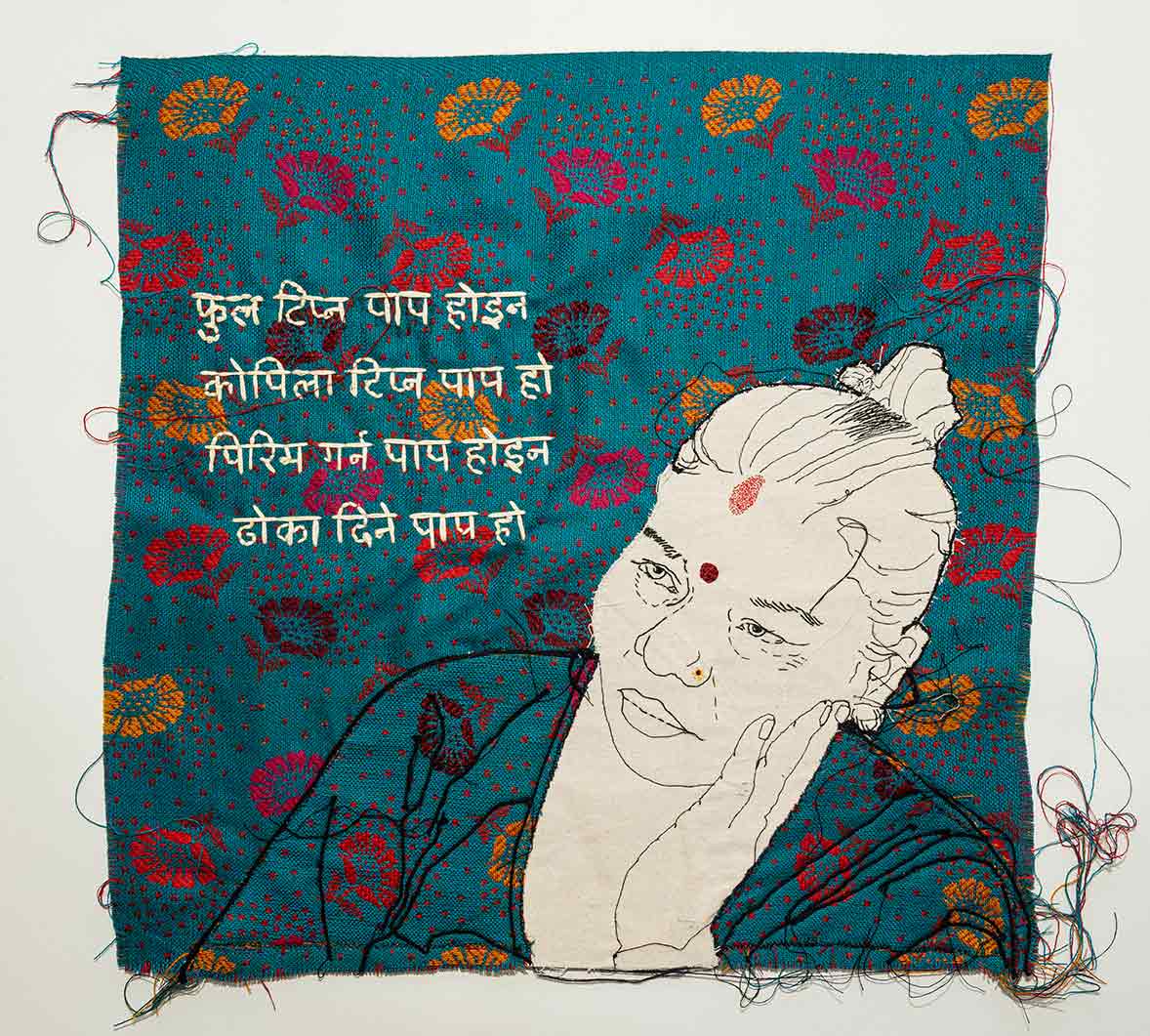


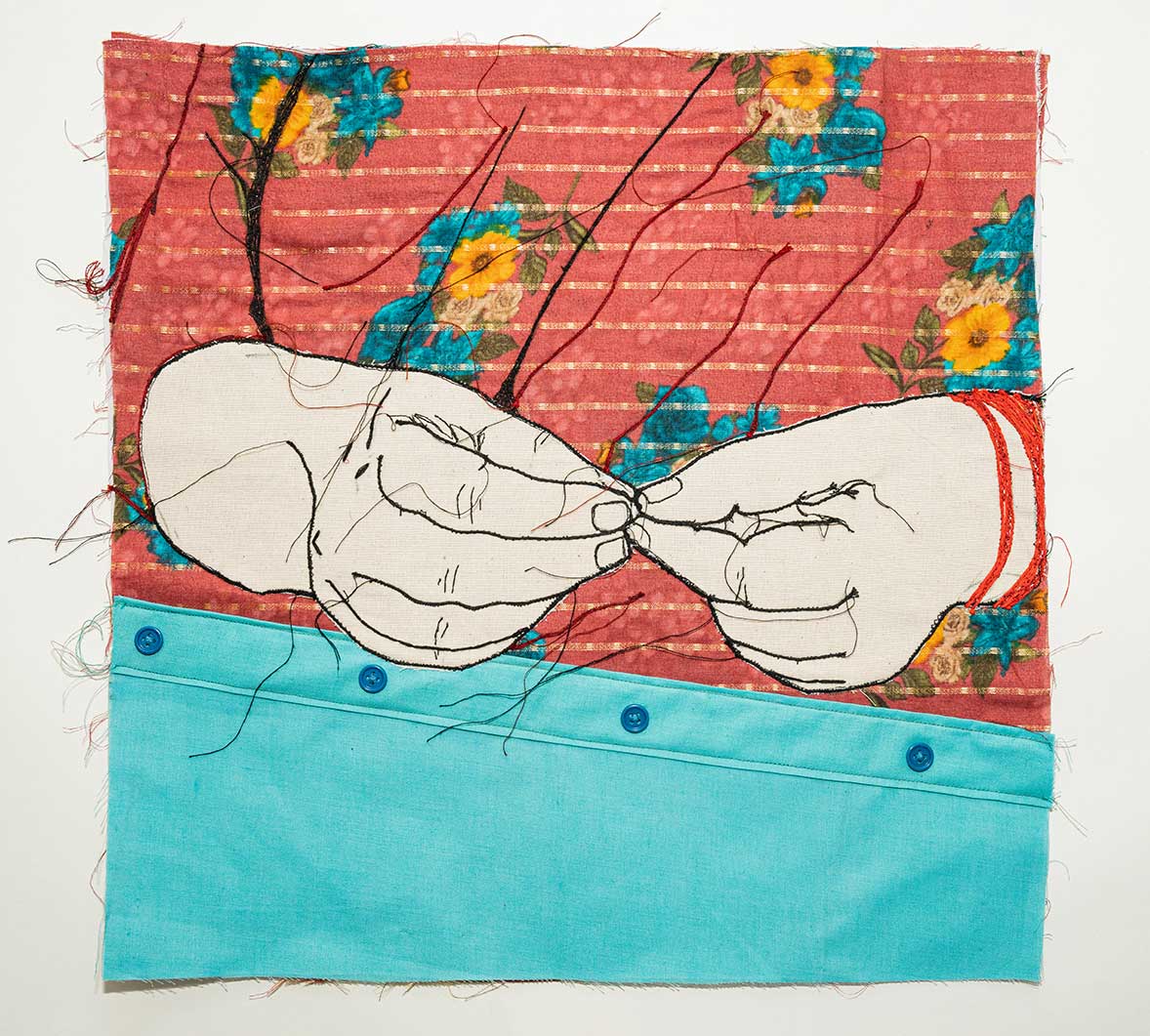

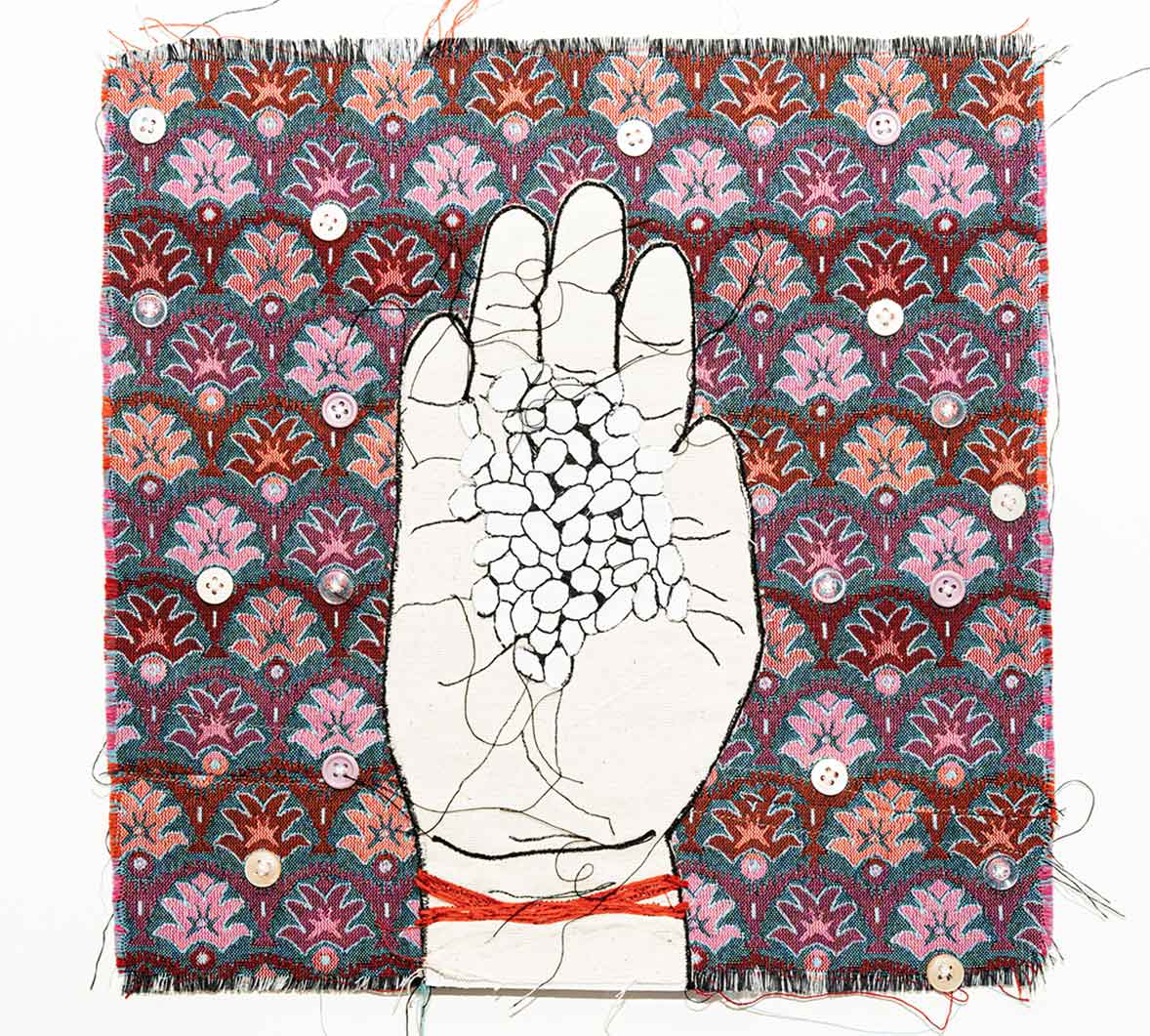
Her needle His name, 2024
Fabric and cotton collage
Varied sizes
The moon is special because of the moon
Not because of the stars
Love is something you do with one
not with thousands
It is not a sin to pick a flower
It is a sin to pick a flower bud
It is not a sin to love
It is a sin to betray
Radha Pariyar speaks in rhymed couplet tukkas to caution young women to marry wisely.
When she married at thirteen, Radha did not know that she was the second wife, to be ignored and undervalued. After becoming a mother, she decided to leave the marriage and take her child to her parents’ home in Achham. Her in-laws warned that her infant son would die of hunger. Later, as a reply, she sent them a photo of her son, healthy and well cared for.
Years later, her husband lost the support of his first wife, and asked Radha to join him. She chose love over resentment and accepted her husband back in her life. The couple now runs a tailoring shop out of their home. Radha sews buttons to finish the clothes, manages the kitchen garden, and handles household chores, while her husband works the sewing machine.
The work presented here defies the assumption that the man of the house who operates the sewing machine, who is the earner, controls everything. Rather, this acknowledges Radha’s labor, her struggles, and her belief in companionship. Each button on the sewing machine and each piece here represent all the women’s work that go overlooked.
Varied sizes
The moon is special because of the moon
Not because of the stars
Love is something you do with one
not with thousands
It is not a sin to pick a flower
It is a sin to pick a flower bud
It is not a sin to love
It is a sin to betray
Radha Pariyar speaks in rhymed couplet tukkas to caution young women to marry wisely.
When she married at thirteen, Radha did not know that she was the second wife, to be ignored and undervalued. After becoming a mother, she decided to leave the marriage and take her child to her parents’ home in Achham. Her in-laws warned that her infant son would die of hunger. Later, as a reply, she sent them a photo of her son, healthy and well cared for.
Years later, her husband lost the support of his first wife, and asked Radha to join him. She chose love over resentment and accepted her husband back in her life. The couple now runs a tailoring shop out of their home. Radha sews buttons to finish the clothes, manages the kitchen garden, and handles household chores, while her husband works the sewing machine.
The work presented here defies the assumption that the man of the house who operates the sewing machine, who is the earner, controls everything. Rather, this acknowledges Radha’s labor, her struggles, and her belief in companionship. Each button on the sewing machine and each piece here represent all the women’s work that go overlooked.
उन्को सुइ, उस्को नाम, २०२४
चाँद चाँद से होता है
सितारों से नहीं
प्यार एक से होता है
हजारों से नहीं
फूल टिप्न पाप हैन
कोपिला टिप्न पाप हो
प्रेम गर्न पाप हैन
धोखा दिनु पाप हो
सितारों से नहीं
प्यार एक से होता है
हजारों से नहीं
फूल टिप्न पाप हैन
कोपिला टिप्न पाप हो
प्रेम गर्न पाप हैन
धोखा दिनु पाप हो
राधा परियार युवतीहरूलाई होस पुर्याएर बिहे गर्न चेतावनी दिने दोहामा बोल्छिन् ।
तेह्र वर्षकै उमेरमा बिहे गर्दा राधालाई आफू वेवास्ता र हेला गरिइने दोस्री श्रीमती बनेँ भन्ने हेक्का नै थिएन । आमा बनेपछि उनले बिहे तोडेर आफ्नो बच्चालाई आफ्नो माइती अछाम लैजाने निर्णय गरिन् । ससुरालीका मान्छेले उनलाई छोरो कुपोषणले मर्छ भन्ने डर पनि देखाए । तिनलाई जवाफ फर्काउन उनले पछि आफू र आफ्नो स्वस्थ र राम्रो हेरचाह पाएको छोराको फोटो पठाइन् ।
वर्षौँ पछि उनका श्रीमान्ले पहिली श्रीमतीको साथ गुमाएपछि राधालाई आफूसँग बस्न भने । राधाले द्वेषको साटो माया रोजिन् र श्रीमान्लाई फेरि आफ्नो जीवनमा स्वीकारिन् । अहिले उनीहरू आफ्नै घरबाट टेलर पसल चलाउँछन् । राधाको श्रीमान् लुगा सिउने मेसिनमा काम गर्छन् भने उनी लुगामा टाँक सिलाउँछिन्, करेसाबारी हेर्छिन् र घरको काम गर्छिन् ।
यहाँ प्रस्तुत कलाकृतिले लुगा सिउने मेसिन चलाउने र कमाउने घरको छोरामान्छेले सबैथोकमाथि नियन्त्रण राख्छ भन्ने मान्यतालाई चुनौती दिन्छ र त्यसको साटो राधाको श्रम, उनका संघर्ष र साथीहरूप्रतिको विश्वासलाई चिन्छ । यहाँ लुगा सिउने मेसिनमा रहेको हरेक टाँक र अन्य वस्तुले सबै वेवास्ता गरिएका महिलाका श्रमलाई प्रतिनिधित्व गर्छन् ।
तेह्र वर्षकै उमेरमा बिहे गर्दा राधालाई आफू वेवास्ता र हेला गरिइने दोस्री श्रीमती बनेँ भन्ने हेक्का नै थिएन । आमा बनेपछि उनले बिहे तोडेर आफ्नो बच्चालाई आफ्नो माइती अछाम लैजाने निर्णय गरिन् । ससुरालीका मान्छेले उनलाई छोरो कुपोषणले मर्छ भन्ने डर पनि देखाए । तिनलाई जवाफ फर्काउन उनले पछि आफू र आफ्नो स्वस्थ र राम्रो हेरचाह पाएको छोराको फोटो पठाइन् ।
वर्षौँ पछि उनका श्रीमान्ले पहिली श्रीमतीको साथ गुमाएपछि राधालाई आफूसँग बस्न भने । राधाले द्वेषको साटो माया रोजिन् र श्रीमान्लाई फेरि आफ्नो जीवनमा स्वीकारिन् । अहिले उनीहरू आफ्नै घरबाट टेलर पसल चलाउँछन् । राधाको श्रीमान् लुगा सिउने मेसिनमा काम गर्छन् भने उनी लुगामा टाँक सिलाउँछिन्, करेसाबारी हेर्छिन् र घरको काम गर्छिन् ।
यहाँ प्रस्तुत कलाकृतिले लुगा सिउने मेसिन चलाउने र कमाउने घरको छोरामान्छेले सबैथोकमाथि नियन्त्रण राख्छ भन्ने मान्यतालाई चुनौती दिन्छ र त्यसको साटो राधाको श्रम, उनका संघर्ष र साथीहरूप्रतिको विश्वासलाई चिन्छ । यहाँ लुगा सिउने मेसिनमा रहेको हरेक टाँक र अन्य वस्तुले सबै वेवास्ता गरिएका महिलाका श्रमलाई प्रतिनिधित्व गर्छन् ।

Weight of the Invisible, 2025
thread on fabric
120 x 140 inch
120 x 140 inch
अदृश्यताको बोझ, सन् २०२५
कपडामा धागो
१२० x १४० इन्च
१२० x १४० इन्च
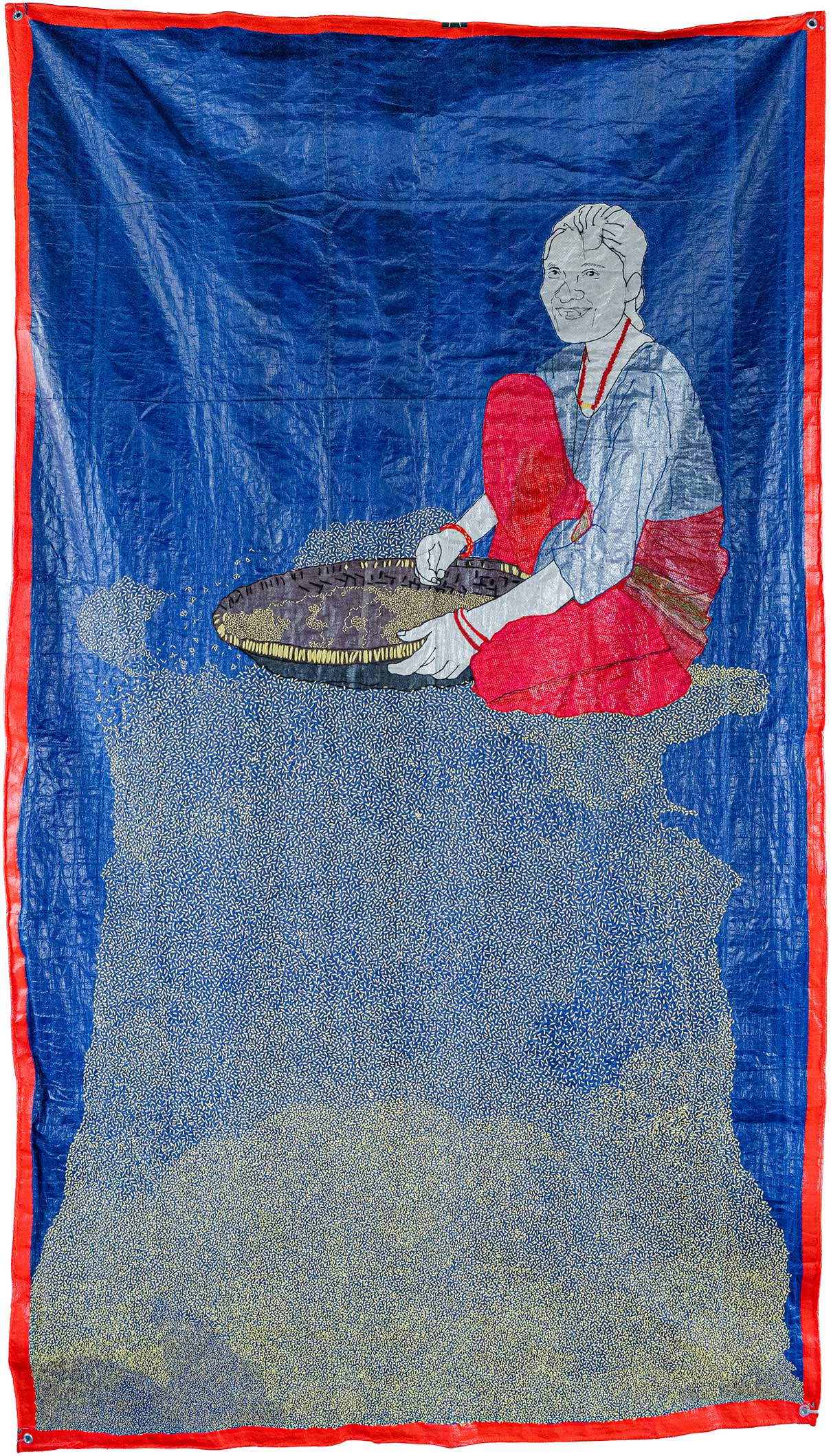
The Winnower’s Rhythm, 2025
sack and thread collage on tarpaulin
112 x 63.5 inch
112 x 63.5 inch
Gauri Sarki is always doing something.
As soon as Gauri wakes up, she takes her goats out to graze for half of the day. After returning home, she has her lunch. But instead of resting during her short break, she chooses another labor – winnowing wheat – and she continues winnowing until it is time to take the goats out again. Winnowing is no insignificant labor. It is skilled work deserving of recognition and documentation.
She enjoys watching television for a few hours in the evening. She doesn’t know the exact price of the TV, but says that it cost her two goats. She and her family are also building a new brick and cement home. She had to sell another pair of goats to help pay for the new window and the door frame. The life story of Gauri, who runs the household by selling goats which she raises, defies the narrative that only men and their labor build houses for families. How many more things in her house must have come from selling goats?
Gauri Sarki is always doing something, but each act of her labor is also an act of love, dedicated to building other lives.
As soon as Gauri wakes up, she takes her goats out to graze for half of the day. After returning home, she has her lunch. But instead of resting during her short break, she chooses another labor – winnowing wheat – and she continues winnowing until it is time to take the goats out again. Winnowing is no insignificant labor. It is skilled work deserving of recognition and documentation.
She enjoys watching television for a few hours in the evening. She doesn’t know the exact price of the TV, but says that it cost her two goats. She and her family are also building a new brick and cement home. She had to sell another pair of goats to help pay for the new window and the door frame. The life story of Gauri, who runs the household by selling goats which she raises, defies the narrative that only men and their labor build houses for families. How many more things in her house must have come from selling goats?
Gauri Sarki is always doing something, but each act of her labor is also an act of love, dedicated to building other lives.
नाङ्लोको धुन, सन् २०२५
तिरपालमा बोरा र धागोको कोलाज
११२ x ६३.५ इन्च
११२ x ६३.५ इन्च
गौरी सार्की सधैँ केही न केही गरिरहेकी हुन्छिन् ।
गौरी उठ्ने बित्तिकै आधा दिन बाख्रा चराउन जान्छिन् । घर फर्किएर खाना खान्छिन् । थकाइ मार्ने छोटो समयमा उनी आराम गर्नुको साटो गहुँ निफन्नतिर लाग्छिन् । र फेरि बाख्रा बाहिर लाने समय नहुन्जेलसम्म निफनिरहन्छिन् । निफन्नु कुनै सितिमिति काम हैन – यो मान्यता र दस्तावेजीकरणका लागि योग्य सिपमूलक काम हो ।
उनी साँझ केही घण्टा टिभी हेर्न रुचाउँछिन् । टिभीको दाम कति हो भन्ने यकिन उनलाई छैन तर उनको दुईवटा बाख्रा बेचे बराबरको खर्च लागेको बताउँछिन् । उनी र उनको परिवारले नयाँ पक्की घर पनि बनाउँदैछन् । झ्यालढोकाका चौकोसको खर्च निकाल्न उनले थप दुईवटा बाख्रा बेच्नुपर्यो । आफूले हुर्काएका बाख्रा बेचेर घर चलाउने गौरीले लोग्नेमान्छे र तिनको श्रमले मात्र परिवारको घरबार बन्छ भन्ने मान्यतालाई झुटो साबित गरेकी छिन् । उनको घरका कति अरू सामान उनले बेचेका बाख्राबाट आए होलान् ?
गौरी सार्की सधैँ केही न केही गरिरहेकी हुन्छिन् ।
गौरी उठ्ने बित्तिकै आधा दिन बाख्रा चराउन जान्छिन् । घर फर्किएर खाना खान्छिन् । थकाइ मार्ने छोटो समयमा उनी आराम गर्नुको साटो गहुँ निफन्नतिर लाग्छिन् । र फेरि बाख्रा बाहिर लाने समय नहुन्जेलसम्म निफनिरहन्छिन् । निफन्नु कुनै सितिमिति काम हैन – यो मान्यता र दस्तावेजीकरणका लागि योग्य सिपमूलक काम हो ।
उनी साँझ केही घण्टा टिभी हेर्न रुचाउँछिन् । टिभीको दाम कति हो भन्ने यकिन उनलाई छैन तर उनको दुईवटा बाख्रा बेचे बराबरको खर्च लागेको बताउँछिन् । उनी र उनको परिवारले नयाँ पक्की घर पनि बनाउँदैछन् । झ्यालढोकाका चौकोसको खर्च निकाल्न उनले थप दुईवटा बाख्रा बेच्नुपर्यो । आफूले हुर्काएका बाख्रा बेचेर घर चलाउने गौरीले लोग्नेमान्छे र तिनको श्रमले मात्र परिवारको घरबार बन्छ भन्ने मान्यतालाई झुटो साबित गरेकी छिन् । उनको घरका कति अरू सामान उनले बेचेका बाख्राबाट आए होलान् ?
गौरी सार्की सधैँ केही न केही गरिरहेकी हुन्छिन् ।
These stories of women from Doti are part of an anthology entitled “Like a Rising River: Stories of Women and Change.”
डोटीका महिलाहरूका यी कथाहरू ‘उर्लँदाे नदीसरि: महिला र परिवर्तनका कथाहरू’ भन्ने शीर्षक भएको कथासङ्ग्रहको हिस्सा हुन्।
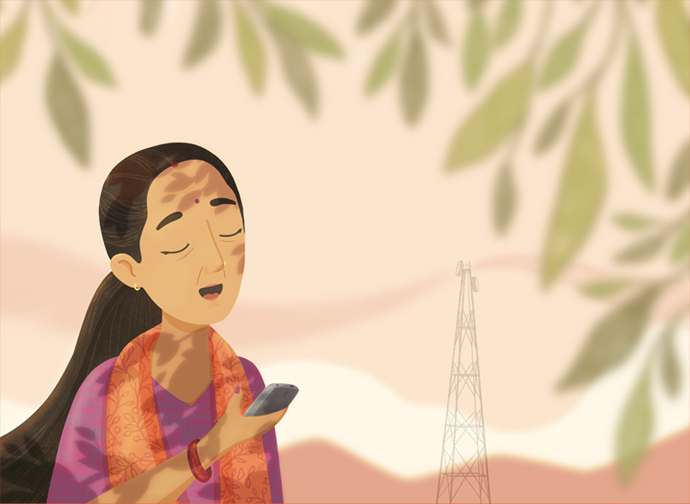
Songs of Change
Sanjana B.K. | Written by Alfa M. Shakya | Illustrated by Anushri Lama
As a young Maoist cadre, Sanjana B.K. wrote and performed revolutionary songs that dreamed of a Nepal that ensured Dalit rights, gender equality and a life of dignity. After the war, she finds herself isolated in the quiet hills of Badikedar where her days are spent finding the best pastures for her goats. But she continues to compose new songs, inspiring the hearts and minds of women like her.
परिवर्तनका गीत
सन्जना विक | लेखन : आल्फा एम. शाक्य | चित्र : अनुश्री लामा
सन्जना विक सानै उमेरमा माओवादी क्रान्तिकारी बनिन् र दलित अधिकार, लैङ्गिक समानता र सम्मानित जीवनबारे सपना देखाउने गीतहरू गाइन्। जनयुद्धपछि उनी बडिकेदारको सुनसान डाँडामा एक्लै छिन् । बाख्रा चराउँदै र तिनका लागि राम्रो घाँस खोज्दै सन्जनाको दिन बित्छ । जनयुद्धमा देखेकी नयाँ नेपालको सपना पूरा नभए पनि आजसम्म उनी आफूजस्ता महिलालाई प्रेरणा दिने नयाँ-नयाँ गीत रचना गरिरहन्छिन् ।
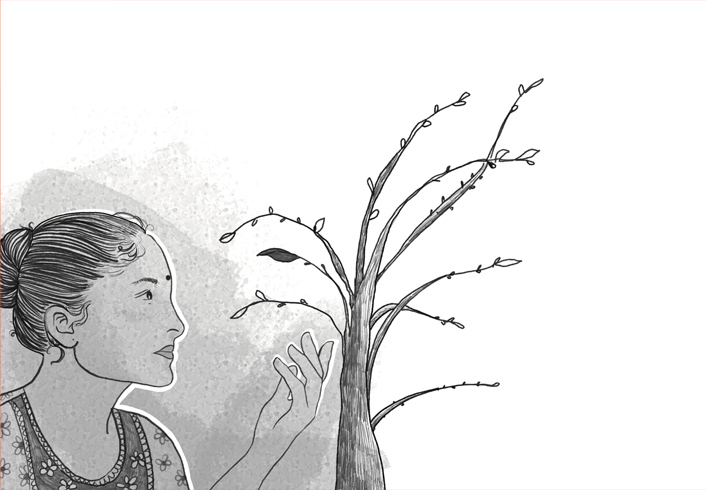
Leaves Sprout Again
Kripa Dewal | Written by Alfa M. Shakya | Illustrated by Manantuna Jyapoo
Twenty-five years old Kripa Dewal and her son have moved back to Silgadhi, where Kripa grew up and where her mother lives. In a society that is not supportive of young Dalit women who leave their husbands, Kripa is emboldened by her mother’s support to build a new career and a new life. Kripa learns that she can depend on her natal home; she can hold new dreams without fear of judgment.
नयाँ पालुवा पलाउने छन्
कृपा देवल | लेखन : आल्फा एम. शाक्य | चित्र : मनन्तुना ज्यापू
पच्चीस वर्षीया कृपा देवल आफ्नो छोरा लिएर सिलगढी फर्किएकी छन् । उनी सिलगढीमै हुर्किएकी थिइन् र उनकी आमा त्यहीँ बस्छिन् । श्रीमान्लाई छाडेर माइत फर्किएकी र त्यसमाथि दलित युवतीलाई हेप्ने समाजमा आमाको साथसहयोगले कृपालाई नयाँ जीवन सुरु गर्न हौसला मिल्छ । आफ्नो माइतीघरको आडभरोसा भएकाले अर्काले के भन्लान् भन्ने डरबिना नै उनी नयाँ सपना देख्न सुरु गर्छिन् ।

Lata’s Photo Studio
Lata Bohara | Written by Alfa M. Shakya | Illustrated by Anushri Lama
After federalism began in Nepal, local governments mobilized to issue citizenship cards to their citizens. Lata Bohara established a photo studio in the remote town of B.P Nagar in Badikedar Rural Municipality in Sudurpashchim Province. As her photo studio grew, so did her economic independence and confidence. Soon, her family and community began to seek advice from her and trust her decisions. Lata became an inspirational story in her community.
लताको फोटो स्टुडियो
लता बोहरा | लेखन : आल्फा एम. शाक्य | चित्र : अनुश्री लामा
नेपालमा संघीय संरचना सुरु भएसँगै स्थानीय तहहरूले नागरिकता परिचयपत्र बाँड्ने काम थाले । लता बोहराले बडिकेदारको दुर्गम सहर बिपि नगरमा फोटो स्टुडियो सञ्चालन गर्न थालिन् । फोटो स्टुडियोको सफलता सँगसँगै उनको आर्थिक स्वतन्त्रता र आत्मविश्वास पनि बढ्दै गयो । चाँडै नै उनको परिवार र समुदायका मानिसहरूले उनीबाट सल्लाह लिन र उनको निर्णयमा विश्वास गर्न थाले । आफ्नो समुदायका लागि लता प्रेरणाकी स्रोत कथा बनिन् ।



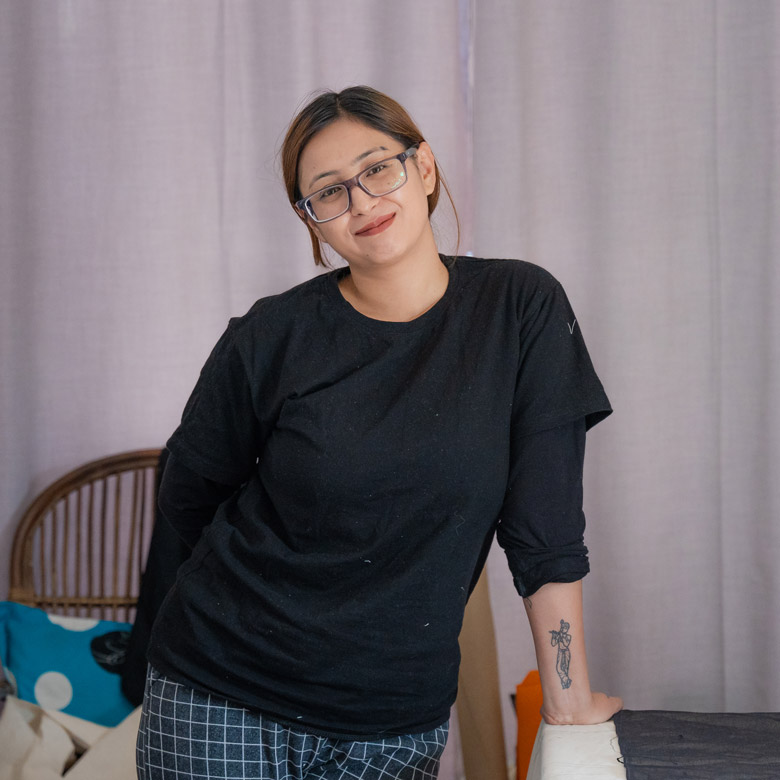
Sofiya Maharjan is a visual artist who blends textile, embroidery, and storytelling to explore themes of memory, gender, and material culture. She has a keen interest in exploring memories connected to personal belongings and the private space, depicting individual and collective lived experiences. Her practice reflects her belief that it is less about the reality of the world and more about how we perceive it.
सोफिया महर्जन एक दृश्य कलाकार हुन् । उनी स्मृति, लैङ्गिकता र भौतिक संस्कृतिका विषयबारे खोज गर्न कपडा, कढाई र कथावाचनको सम्मिश्रणमाथि काम गर्छिन् । व्यक्तिगत तथा सामूहिक जीवनका भोगाइ दर्शाउने वैयक्तिक सम्बन्ध र निजी स्थानसँग सम्बन्धित स्मृतिको खोजीमा उनको गहिरो रूचि छ । उनका कामले संसारको वास्तविकता भन्दा पनि यसबारे हाम्रो बुझाई महत्त्वपूर्ण हुन्छ भन्ने उनको विश्वासलाई झल्काउँछन् ।