kailali
कैलाली

Stretching across the fertile Terai plains of far-western Nepal, Kailali is marked by cultural diversity, including significant Tharu indigenous populations. Women and excluded groups here face challenges related to land rights, representation, and the lasting impacts of the historical Kamaiya bonded labor system that predominantly affected Tharu communities.
सुदूरपश्चिम नेपालको उर्बर तराई मैदानमा फैलिएको कैलाली सांस्कृतिक विविधताले चिनिन्छ, जसमा महत्वपूर्ण थारु आदिवासी जनसंख्या पनि समावेश छ । यहाँका महिलाहरू र बहिष्कृत समूहहरूले भूमिसम्बन्धी अधिकार, प्रतिनिधित्व, र ऐतिहासिक कमैया दासप्रथा प्रणालीका लामो समयसम्म रहने प्रभावसहितका चुनौतीहरूको सामना गर्दैछन्, जसले मुख्य रूपमा थारु समुदायहरूलाई प्रभावित गर्यो।
Sunita Maharjan, b. 1986 CE (2042 BS), Kirtipur
In Kailali, Maharjan explored the intersection of domestic space, tradition, and gender. Drawing upon feminine craft traditions such as weaving, embroidery, and crochet, she treated these practices not only as aesthetic forms, but as vessels for memory, inheritance, and quiet resistance.
Marriage, often celebrated as a new beginning, can also mark a rupture, the reshaping of a woman’s identity and autonomy within the home, and her mobility. In Maharjan’s work the domestic realm doubles as a site of shelter and of limitation, where names, roles, and dreams are redefined by social codes.
Maharjan’s stitched textile-based works invite the audience to reflect on women’s position within patriarchal social structures by making visible the repetitive and often invisible labor of domestic life. Her works ask: what space is left for women to imagine, to desire, and simply to exist?
Marriage, often celebrated as a new beginning, can also mark a rupture, the reshaping of a woman’s identity and autonomy within the home, and her mobility. In Maharjan’s work the domestic realm doubles as a site of shelter and of limitation, where names, roles, and dreams are redefined by social codes.
Maharjan’s stitched textile-based works invite the audience to reflect on women’s position within patriarchal social structures by making visible the repetitive and often invisible labor of domestic life. Her works ask: what space is left for women to imagine, to desire, and simply to exist?
सुनिता महर्जन, जन्म सन् १९८६, कीर्तिपूर
कैलालीमा छँदा महर्जनले घरेलु स्थान, परम्परा र लैङ्गिकताबिचको अन्तरसम्बन्ध अध्ययन गरिन् । सिलाइ, कढाई र कुरूसले बुन्ने जस्ता परम्परागत महिलाका सिपबाट प्रेरणा लिँदै उनले यी अभ्यासलाई कलात्मक आकृतिका रूपमा मात्र नभई स्मृति, पुस्तान्तरण र मौन विरोधको रूपमा लिइन् ।
प्राय: नयाँ सुरुवातको रूपमा मानिने विवाह सँगै एक विछोड पनि आउँछ – यसले परिवारभित्र महिलाको पहिचान र स्वायत्तता एवं तिनको हिँडडुल गर्ने स्वतन्त्रतालाई नयाँ आकार दिनसक्छ । महर्जनका कृतिमा घरेलु संसार आश्रय र सीमाङ्कन दुवैको रूपमा उजागर हुन्छ जहाँ नाम, भूमिका र सपनाहरूलाई सामाजिक मूल्यमान्यताले पुनर्भाषित गरिरहेका हुन्छन् ।
महर्जनको सिलाइएका कपडाका कृतिले घरेलु जीवनमा प्राय: अदृश्य रहने र निरन्तर चलिरहने कामलाई प्रत्यक्षता दिँदै पितृसत्तात्मक सामाजिक संरचनामा महिलाको स्थानबारे मनन् गर्न दर्शकलाई आह्वान गर्छ । उनका कृतिले सोध्छन् – महिलाका लागि कल्पना गर्न, इच्छा गर्न वा केवल बाँच्नकै लागि पनि कुनै ठाउँ बाँकि छ र ?
प्राय: नयाँ सुरुवातको रूपमा मानिने विवाह सँगै एक विछोड पनि आउँछ – यसले परिवारभित्र महिलाको पहिचान र स्वायत्तता एवं तिनको हिँडडुल गर्ने स्वतन्त्रतालाई नयाँ आकार दिनसक्छ । महर्जनका कृतिमा घरेलु संसार आश्रय र सीमाङ्कन दुवैको रूपमा उजागर हुन्छ जहाँ नाम, भूमिका र सपनाहरूलाई सामाजिक मूल्यमान्यताले पुनर्भाषित गरिरहेका हुन्छन् ।
महर्जनको सिलाइएका कपडाका कृतिले घरेलु जीवनमा प्राय: अदृश्य रहने र निरन्तर चलिरहने कामलाई प्रत्यक्षता दिँदै पितृसत्तात्मक सामाजिक संरचनामा महिलाको स्थानबारे मनन् गर्न दर्शकलाई आह्वान गर्छ । उनका कृतिले सोध्छन् – महिलाका लागि कल्पना गर्न, इच्छा गर्न वा केवल बाँच्नकै लागि पनि कुनै ठाउँ बाँकि छ र ?
Sunita Maharjan, b. 1986 CE (2042 BS), Kirtipur
In Kailali, Maharjan explored the intersection of domestic space, tradition, and gender. Drawing upon feminine craft traditions such as weaving, embroidery, and crochet, she treated these practices not only as aesthetic forms, but as vessels for memory, inheritance, and quiet resistance.
Marriage, often celebrated as a new beginning, can also mark a rupture, the reshaping of a woman’s identity and autonomy within the home, and her mobility. In Maharjan’s work the domestic realm doubles as a site of shelter and of limitation, where names, roles, and dreams are redefined by social codes.
Maharjan’s stitched textile-based works invite the audience to reflect on women’s position within patriarchal social structures by making visible the repetitive and often invisible labor of domestic life. Her works ask: what space is left for women to imagine, to desire, and simply to exist?
Marriage, often celebrated as a new beginning, can also mark a rupture, the reshaping of a woman’s identity and autonomy within the home, and her mobility. In Maharjan’s work the domestic realm doubles as a site of shelter and of limitation, where names, roles, and dreams are redefined by social codes.
Maharjan’s stitched textile-based works invite the audience to reflect on women’s position within patriarchal social structures by making visible the repetitive and often invisible labor of domestic life. Her works ask: what space is left for women to imagine, to desire, and simply to exist?
सुनिता महर्जन, जन्म सन् १९८६, कीर्तिपूर
कैलालीमा छँदा महर्जनले घरेलु स्थान, परम्परा र लैङ्गिकताबिचको अन्तरसम्बन्ध अध्ययन गरिन् । सिलाइ, कढाई र कुरूसले बुन्ने जस्ता परम्परागत महिलाका सिपबाट प्रेरणा लिँदै उनले यी अभ्यासलाई कलात्मक आकृतिका रूपमा मात्र नभई स्मृति, पुस्तान्तरण र मौन विरोधको रूपमा लिइन् ।
प्राय: नयाँ सुरुवातको रूपमा मानिने विवाह सँगै एक विछोड पनि आउँछ – यसले परिवारभित्र महिलाको पहिचान र स्वायत्तता एवं तिनको हिँडडुल गर्ने स्वतन्त्रतालाई नयाँ आकार दिनसक्छ । महर्जनका कृतिमा घरेलु संसार आश्रय र सीमाङ्कन दुवैको रूपमा उजागर हुन्छ जहाँ नाम, भूमिका र सपनाहरूलाई सामाजिक मूल्यमान्यताले पुनर्भाषित गरिरहेका हुन्छन् ।
महर्जनको सिलाइएका कपडाका कृतिले घरेलु जीवनमा प्राय: अदृश्य रहने र निरन्तर चलिरहने कामलाई प्रत्यक्षता दिँदै पितृसत्तात्मक सामाजिक संरचनामा महिलाको स्थानबारे मनन् गर्न दर्शकलाई आह्वान गर्छ । उनका कृतिले सोध्छन् – महिलाका लागि कल्पना गर्न, इच्छा गर्न वा केवल बाँच्नकै लागि पनि कुनै ठाउँ बाँकि छ र ?
प्राय: नयाँ सुरुवातको रूपमा मानिने विवाह सँगै एक विछोड पनि आउँछ – यसले परिवारभित्र महिलाको पहिचान र स्वायत्तता एवं तिनको हिँडडुल गर्ने स्वतन्त्रतालाई नयाँ आकार दिनसक्छ । महर्जनका कृतिमा घरेलु संसार आश्रय र सीमाङ्कन दुवैको रूपमा उजागर हुन्छ जहाँ नाम, भूमिका र सपनाहरूलाई सामाजिक मूल्यमान्यताले पुनर्भाषित गरिरहेका हुन्छन् ।
महर्जनको सिलाइएका कपडाका कृतिले घरेलु जीवनमा प्राय: अदृश्य रहने र निरन्तर चलिरहने कामलाई प्रत्यक्षता दिँदै पितृसत्तात्मक सामाजिक संरचनामा महिलाको स्थानबारे मनन् गर्न दर्शकलाई आह्वान गर्छ । उनका कृतिले सोध्छन् – महिलाका लागि कल्पना गर्न, इच्छा गर्न वा केवल बाँच्नकै लागि पनि कुनै ठाउँ बाँकि छ र ?
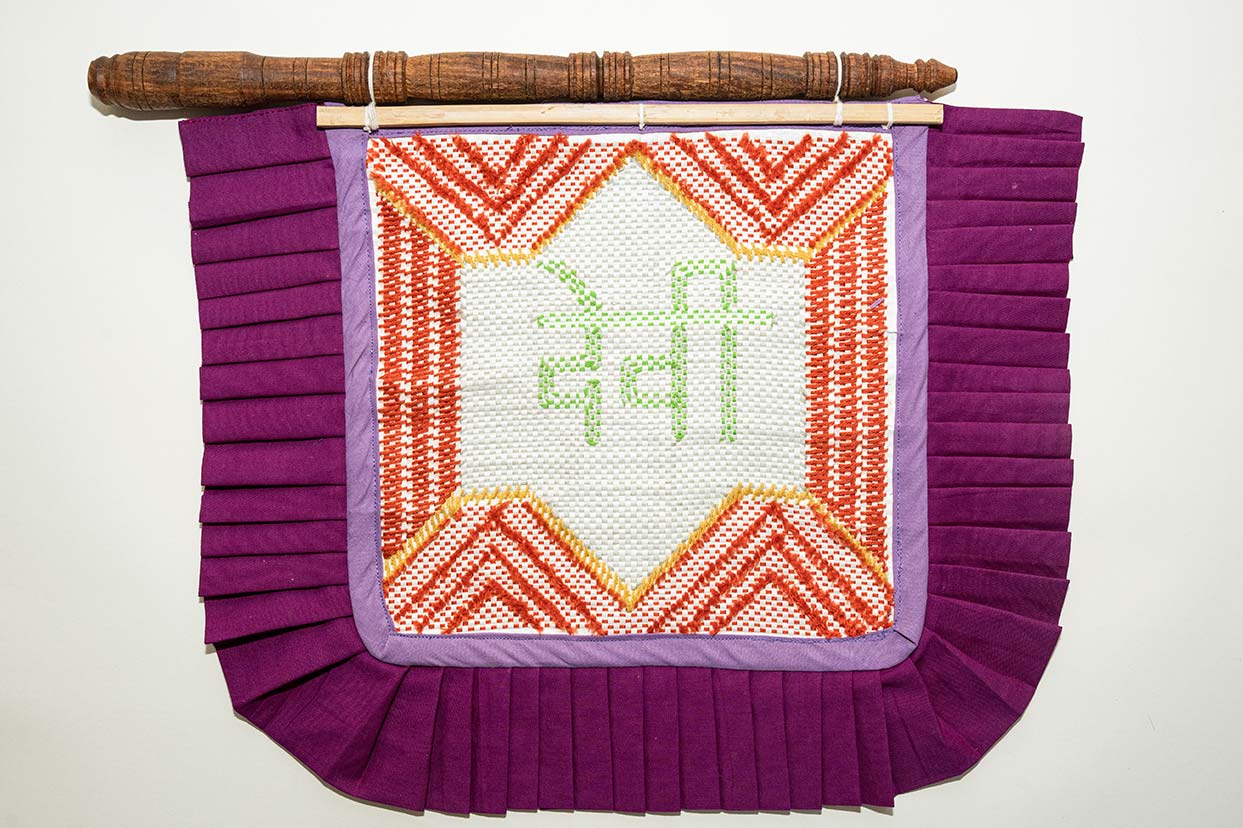
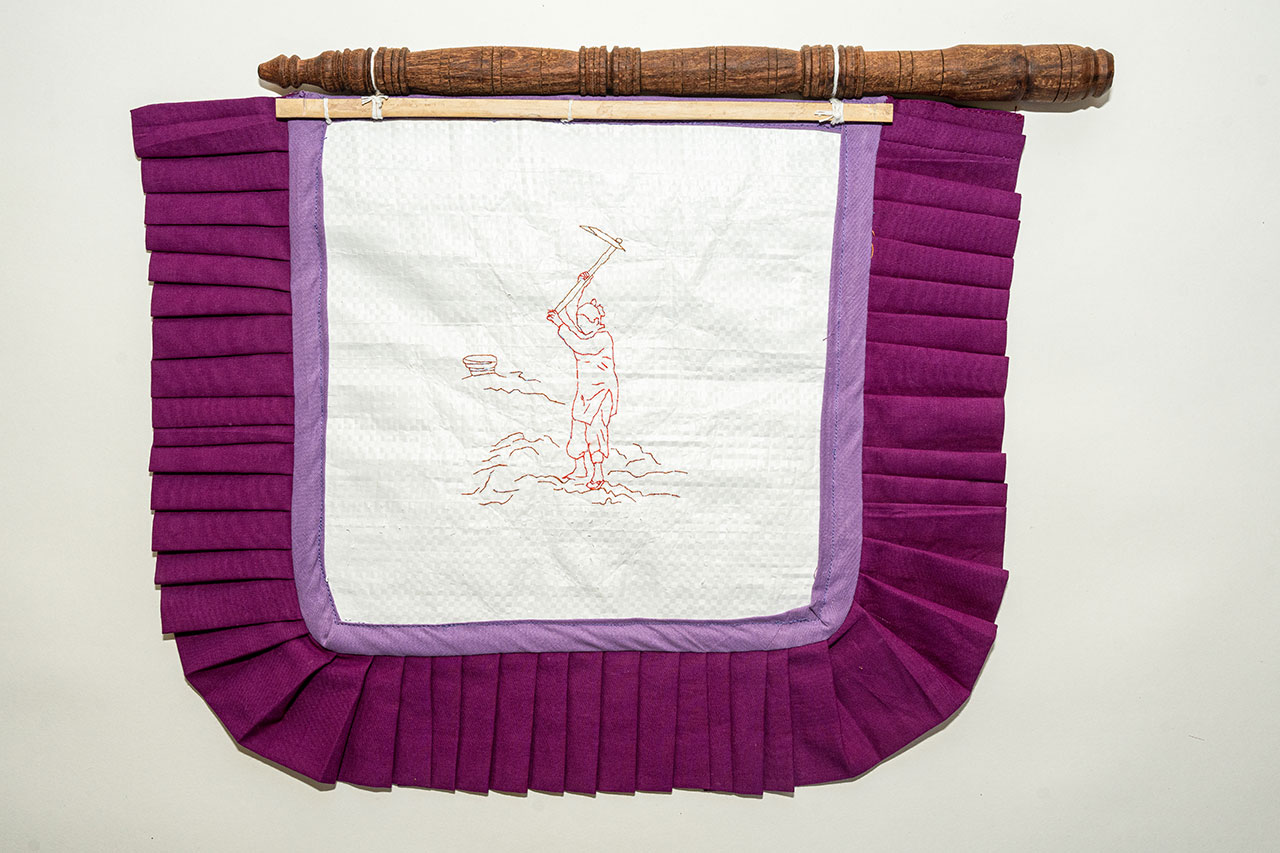
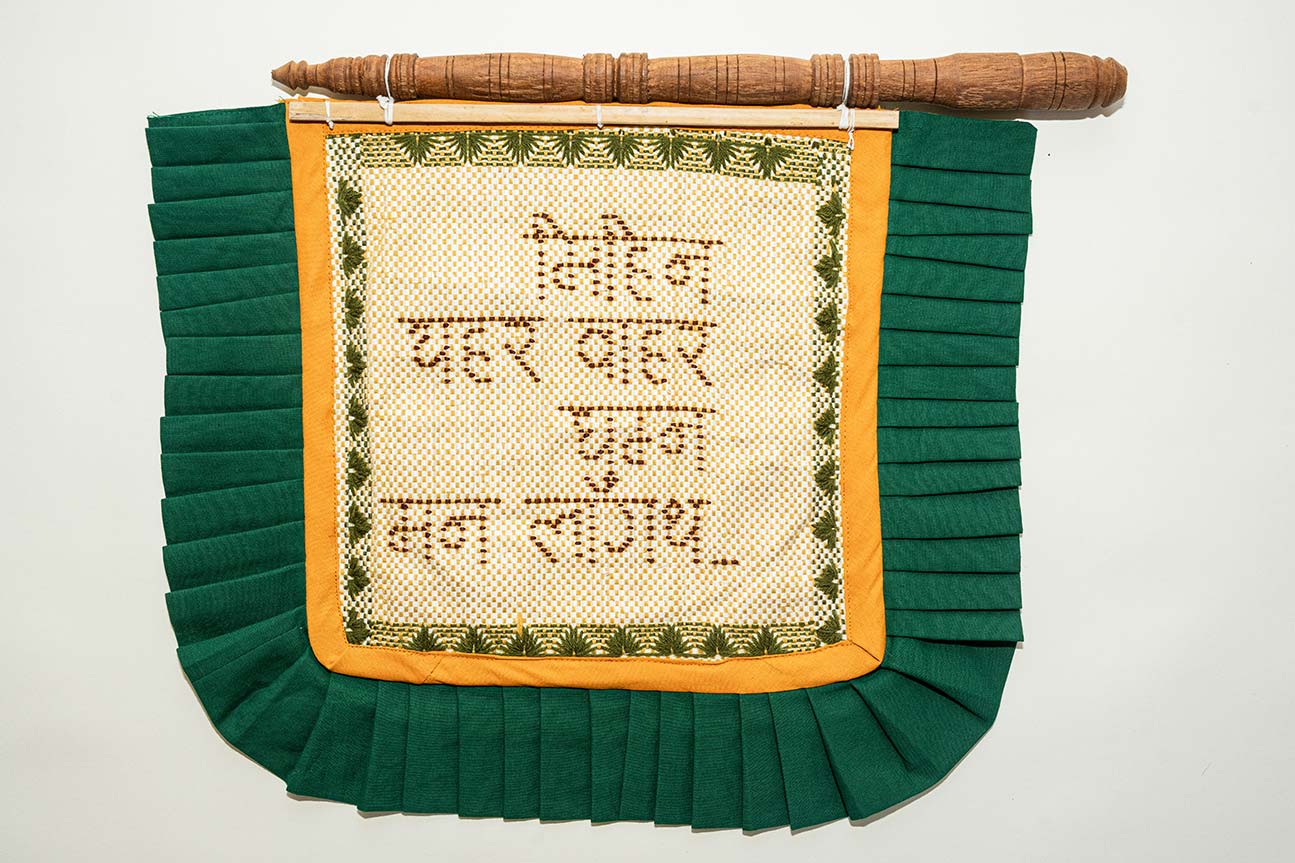
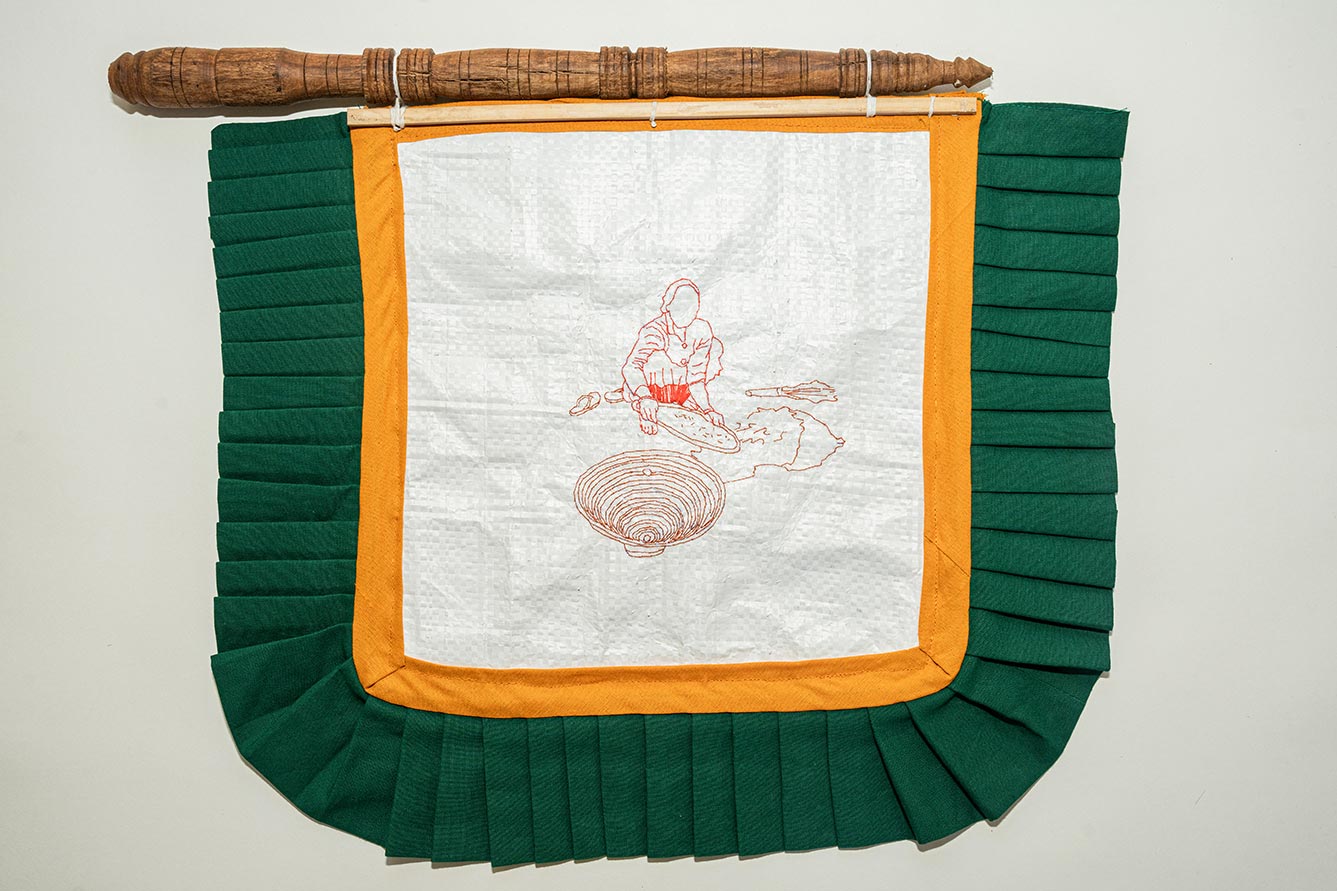
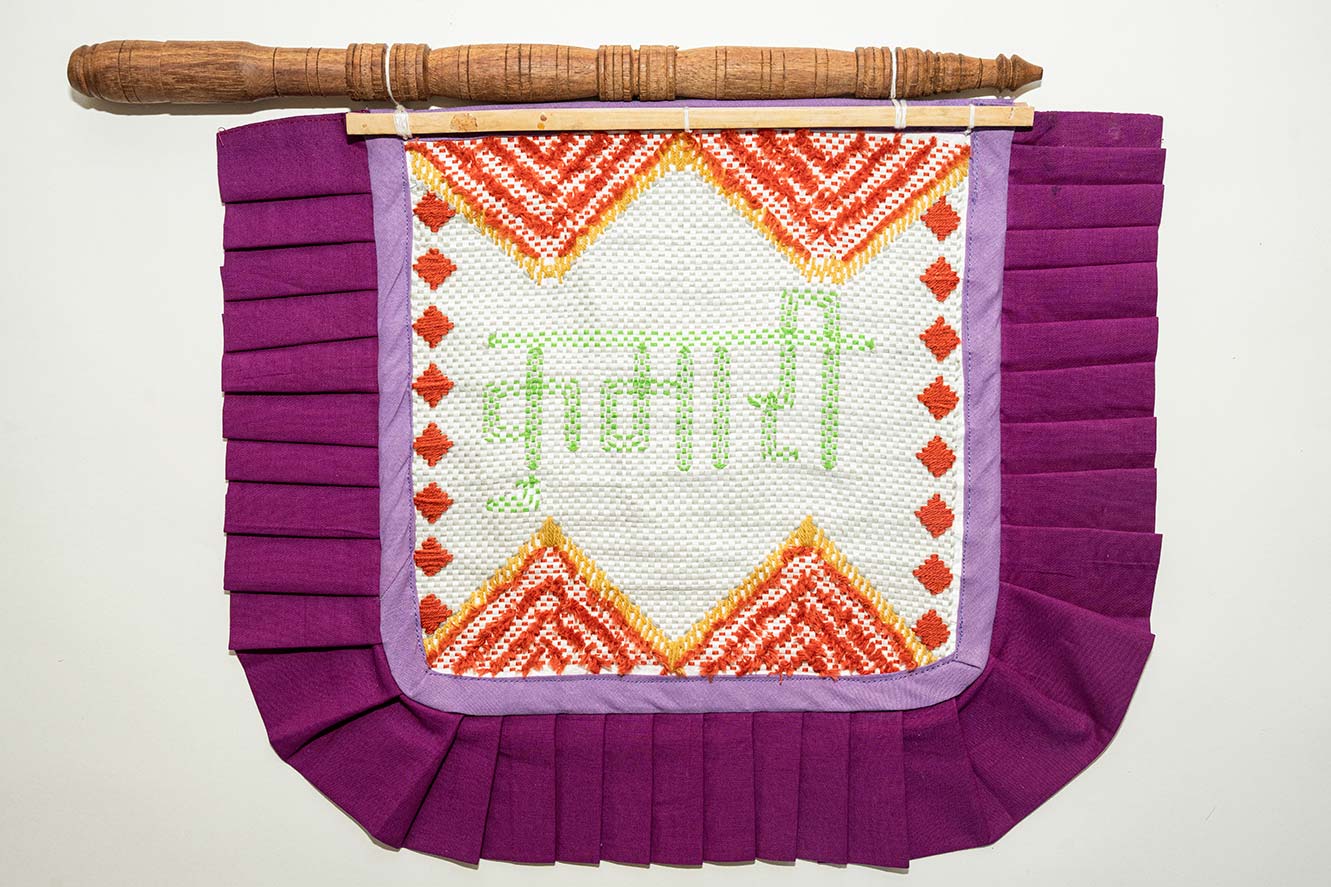
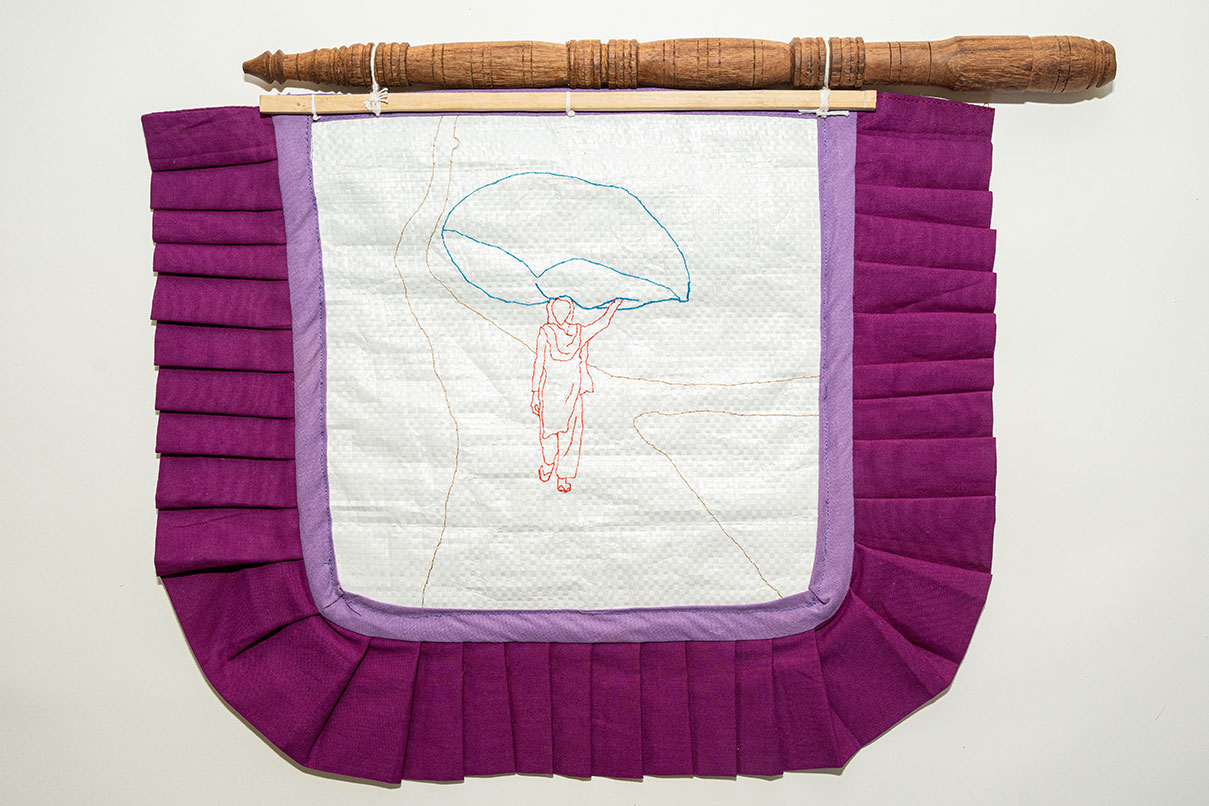
Woven Expectations: Boundaries, Resistance,
and Reclaimed Space, 2024
and Reclaimed Space, 2024
Embroidery on woven plastic rice bags
18.2 x13.5 inches each
18.2 x13.5 inches each
When a woman enters the patriarchal institution of marriage, expectations shift abruptly. Autonomy, desire, and self-expression are suppressed. She is confined to rigid domestic roles, and her choices are no longer her own. She cannot simply express the desire to walk where she pleases without judgment, while a man’s freedom to do so is rarely questioned.
Marriage demands that she become an ever-present caretaker, a silent guardian. Tradition reshapes her identity, even legally – she must change her middle name from ‘Kumari’ to ‘Devi’ on her citizenship card. Upon marriage, she becomes the ideal of virtuous womanhood, not more an individual. Aspirations beyond domestic duty are considered indulgent, inappropriate.
At the center of this work is the Bena — a handwoven fan traditionally gifted to brides in Nepal’s southern plains. Crafted by women, these fans carry intricate patterns woven through with unspoken blessings and silent farewells. Here, they are reimagined as vessels of resistance, whispering of defiance, longing, and dreams yet unfulfilled.
Woven Expectations transforms domestic craft into a political gesture to amplify the voices of those who resist confinement. It is a tribute to women who stitch new narratives into inherited traditions, reclaiming identity and future on their own terms.
Marriage demands that she become an ever-present caretaker, a silent guardian. Tradition reshapes her identity, even legally – she must change her middle name from ‘Kumari’ to ‘Devi’ on her citizenship card. Upon marriage, she becomes the ideal of virtuous womanhood, not more an individual. Aspirations beyond domestic duty are considered indulgent, inappropriate.
At the center of this work is the Bena — a handwoven fan traditionally gifted to brides in Nepal’s southern plains. Crafted by women, these fans carry intricate patterns woven through with unspoken blessings and silent farewells. Here, they are reimagined as vessels of resistance, whispering of defiance, longing, and dreams yet unfulfilled.
Woven Expectations transforms domestic craft into a political gesture to amplify the voices of those who resist confinement. It is a tribute to women who stitch new narratives into inherited traditions, reclaiming identity and future on their own terms.
बुनिएका अपेक्षा : सीमा, प्रतिरोध र फिर्ता लिइएका
स्थान, सन् २०२४
स्थान, सन् २०२४
बुनेको प्लास्टिकको चामलको बोरामा कढाई हरेक
१८.२ x१३.५ इन्च
१८.२ x१३.५ इन्च
कोही महिला विवाहको पितृसत्तात्मक व्यवस्थाभित्र पस्दा अपेक्षाहरू एक्कासी बदलिन्छन् । स्वायत्तता, आकांक्षा र आत्म-अभिव्यक्ति दबाइन्छन् । उनी कठिन घरेलु भूमिकामा बन्द हुन्छिन् र उनका इच्छा अब आफ्ना मात्र रहँदैनन् । मान्छेले के भन्लान् भन्ने नसोची आफूलाई मन लागेसरि हिँडडुल गर्ने इच्छा उनी व्यक्त गर्नै सक्दिनन्, जबकि पुरुषको सोही स्वतन्त्रतामाथि कहिल्यै प्रश्न उठ्दैन ।
बिहेको संस्कारले उनलाई सँधै उपस्थित रहने हेरचाहकर्ता र मौन संरक्षक बन्न भन्छ । परम्पराले उनको पहिचानलाई बदल्छ, कानुनी रूपमा पनि उनले नागरिकतामा आफ्नो नाममा कुमारी लेखिएको भए हटाएर देवी लेख्न थाल्नुपर्छ । बिहेपछि उनी एक व्यक्ति होइन सदाचारितापूर्ण नारीत्वको आदर्श बन्छिन् । घरायसी दायित्व भन्दा परका आकांक्षाहरू आसक्ति र अनुचित मानिन्छन् ।
यस कलाकृतिको केन्द्रमा बेना – तराईमा नयाँ दुलहीलाई परम्परागत रूपमा उपहारमा दिइने हातले बुनेको पङ्खा – रहेको छ । महिलाले बनाउने यी पङ्खामा अव्यक्त आशीर्वाद र मौन बिदाईले बुनेका जटिल ढाँचाहरू हुन्छन् । यहाँ तिनलाई विरोध, अभिलाषा र अधुरा सपनाहरूको कानेखुसी र दृढताको वाहनका रूपमा पुनर्कल्पना गरिएको छ ।
बुनिएका अपेक्षाले बन्धनको प्रतिरोध गर्नेहरूको आवाजलाई थप फैलाउन घरेलु सिपलाई राजनीतिक अभिव्यक्तिमा रूपान्तर गर्छ । यो कृति ती महिला प्रति समर्पित छ जसले आफ्नै सर्तमा आफ्नो पहिचान र भविष्यमाथि दावा गर्दै पुस्तैनी परम्परासँग नयाँ कथा गाँसीरहेका छन् ।
बिहेको संस्कारले उनलाई सँधै उपस्थित रहने हेरचाहकर्ता र मौन संरक्षक बन्न भन्छ । परम्पराले उनको पहिचानलाई बदल्छ, कानुनी रूपमा पनि उनले नागरिकतामा आफ्नो नाममा कुमारी लेखिएको भए हटाएर देवी लेख्न थाल्नुपर्छ । बिहेपछि उनी एक व्यक्ति होइन सदाचारितापूर्ण नारीत्वको आदर्श बन्छिन् । घरायसी दायित्व भन्दा परका आकांक्षाहरू आसक्ति र अनुचित मानिन्छन् ।
यस कलाकृतिको केन्द्रमा बेना – तराईमा नयाँ दुलहीलाई परम्परागत रूपमा उपहारमा दिइने हातले बुनेको पङ्खा – रहेको छ । महिलाले बनाउने यी पङ्खामा अव्यक्त आशीर्वाद र मौन बिदाईले बुनेका जटिल ढाँचाहरू हुन्छन् । यहाँ तिनलाई विरोध, अभिलाषा र अधुरा सपनाहरूको कानेखुसी र दृढताको वाहनका रूपमा पुनर्कल्पना गरिएको छ ।
बुनिएका अपेक्षाले बन्धनको प्रतिरोध गर्नेहरूको आवाजलाई थप फैलाउन घरेलु सिपलाई राजनीतिक अभिव्यक्तिमा रूपान्तर गर्छ । यो कृति ती महिला प्रति समर्पित छ जसले आफ्नै सर्तमा आफ्नो पहिचान र भविष्यमाथि दावा गर्दै पुस्तैनी परम्परासँग नयाँ कथा गाँसीरहेका छन् ।
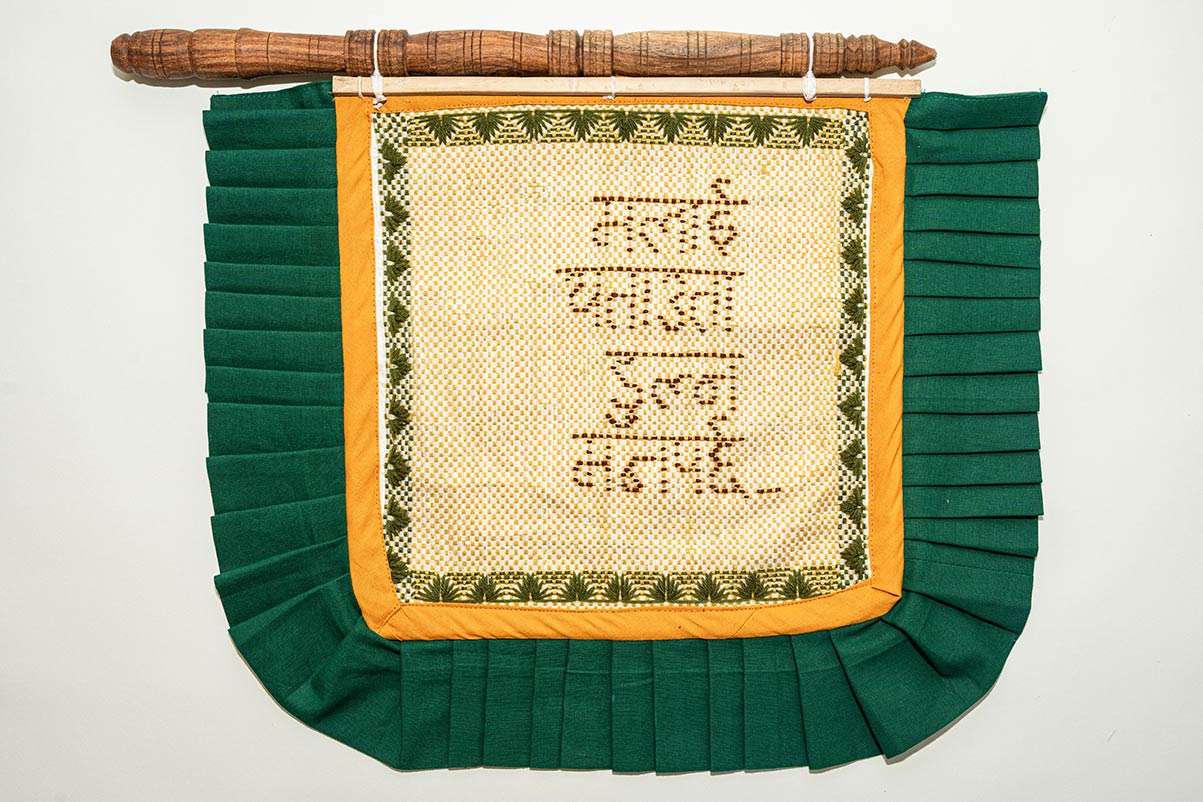
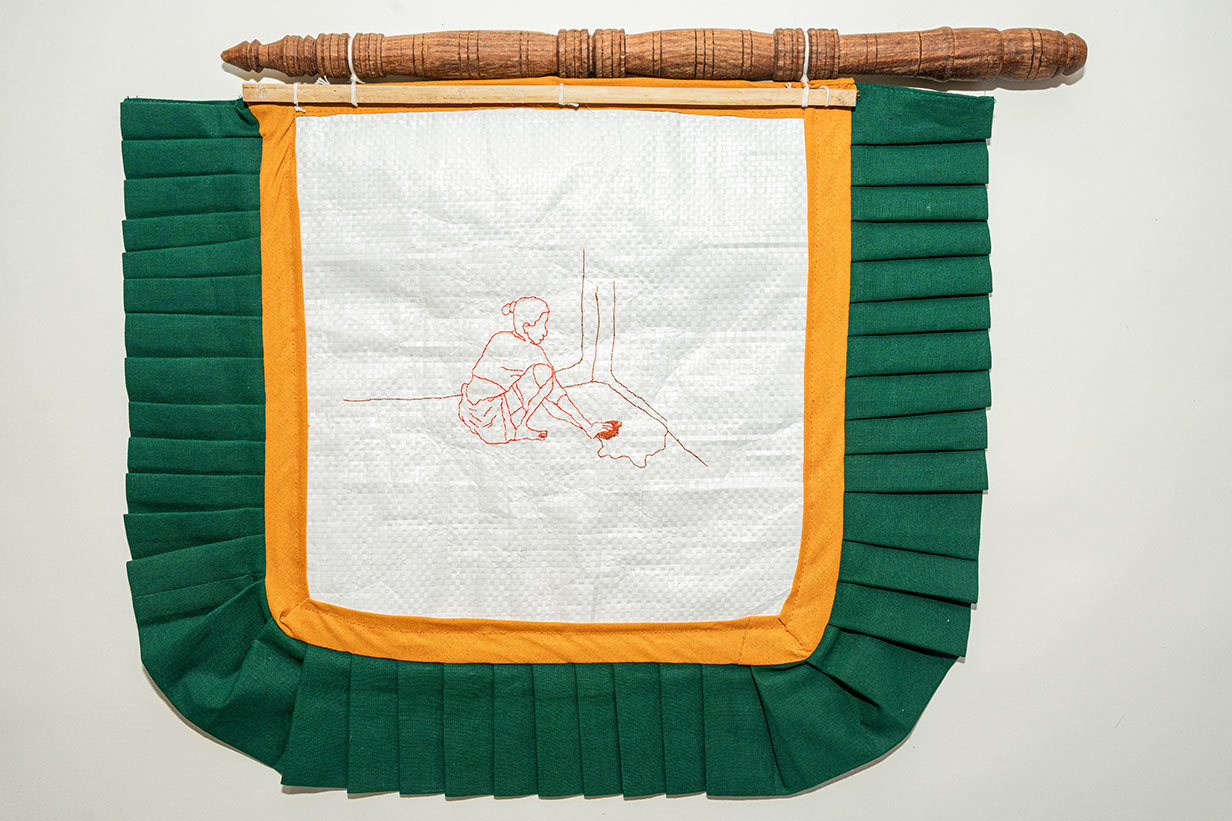
Invisible Wall, 2025
Hand Stitching on Fabric
23.5 x 23.5 inches each
23.5 x 23.5 inches each
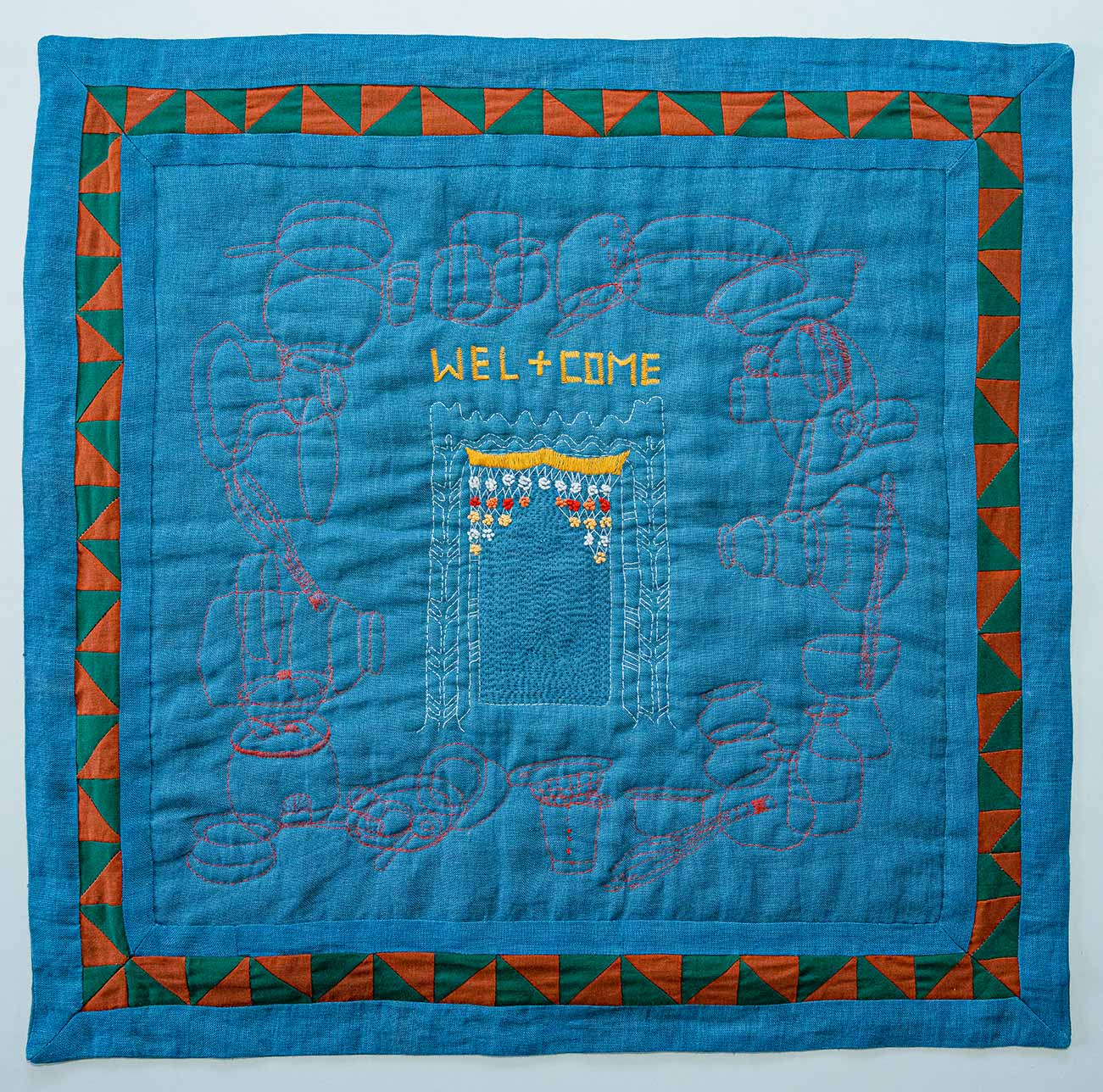
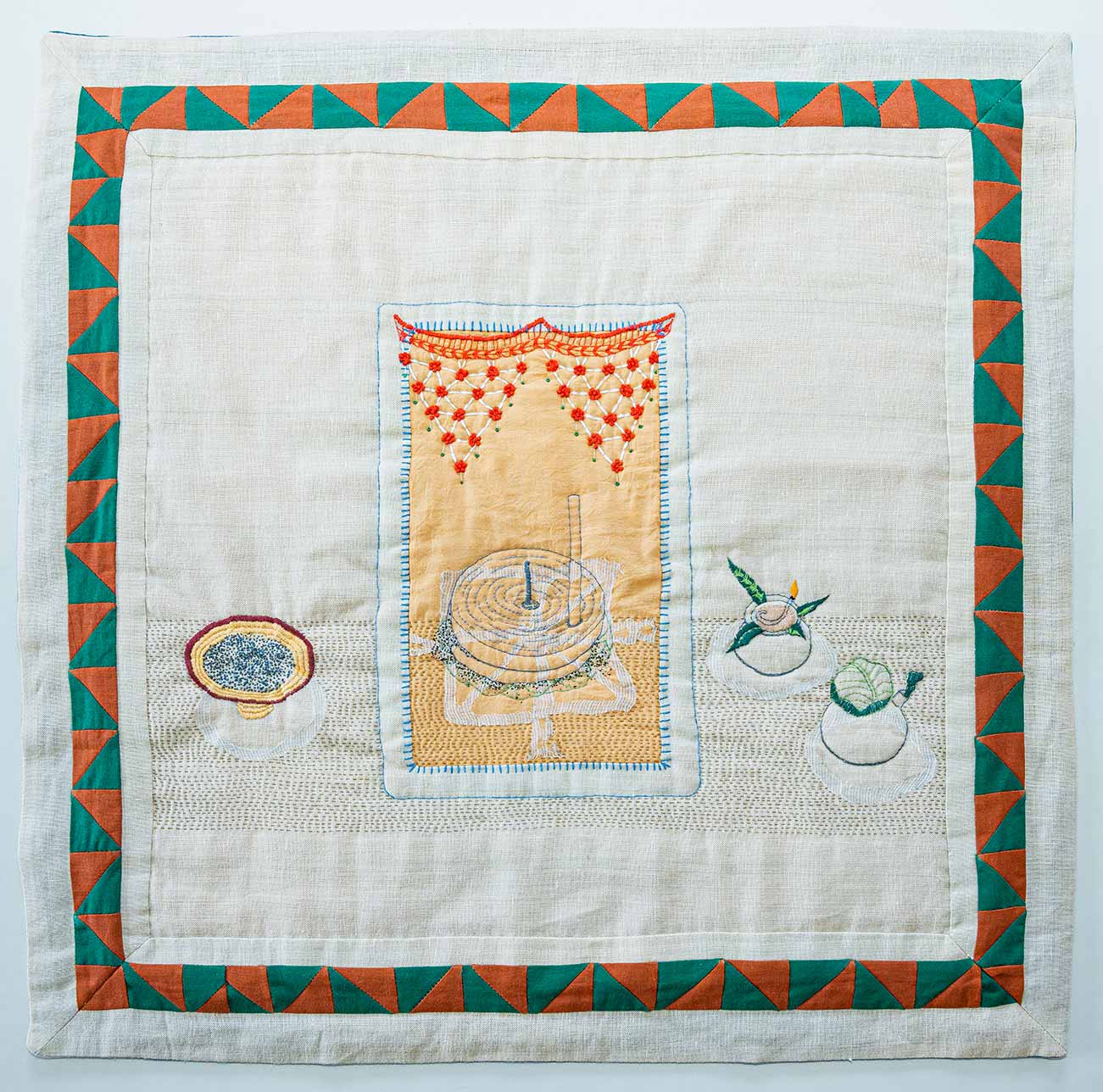
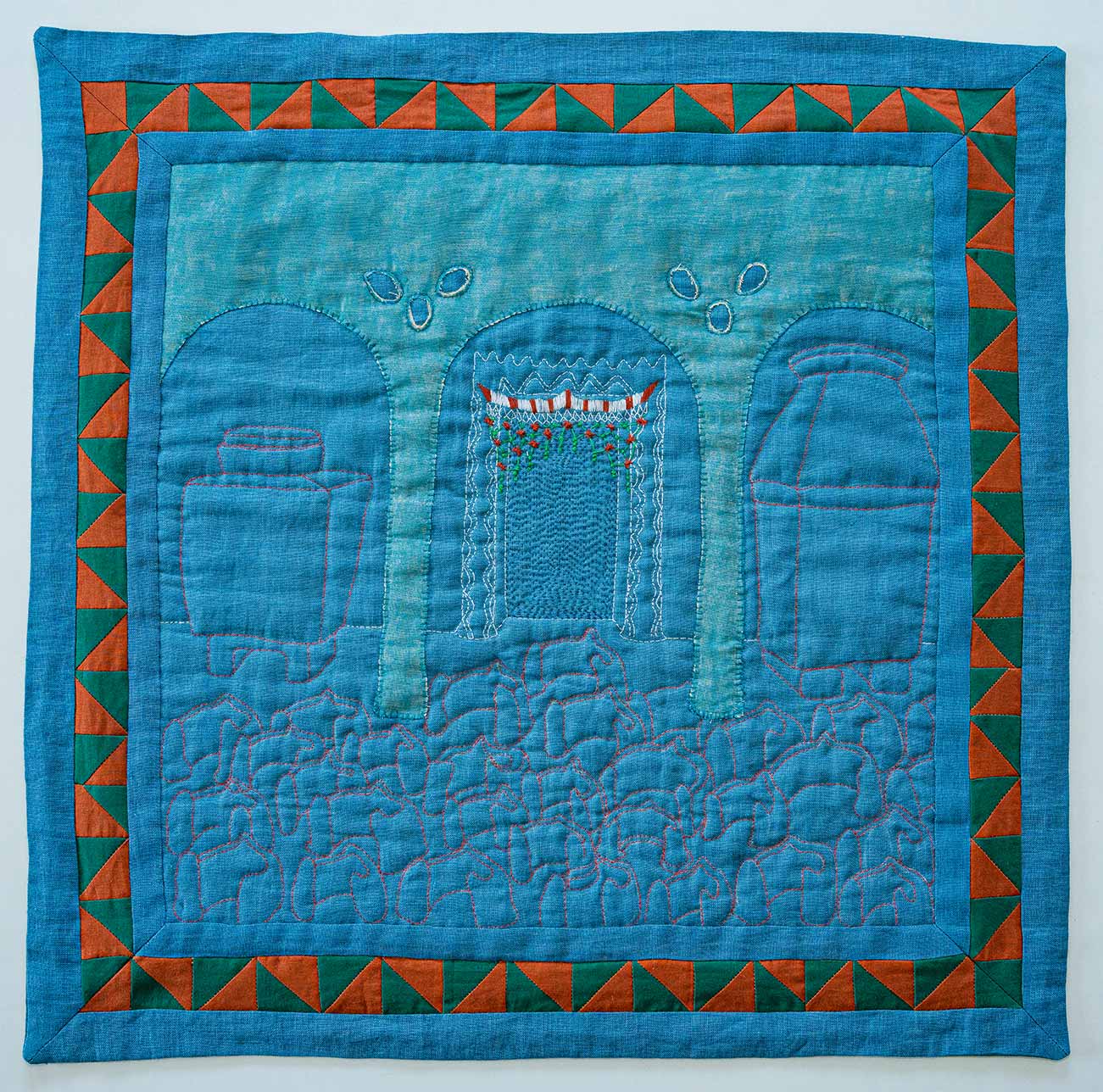
The decorated doors of traditional Tharu homes are often adorned with colorful, handwoven crochet designs – a popular artform being passed down by Tharu women. At the center of this work, the word “Welcome” signals both hospitality and transition. The door becomes a symbolic threshold: a passage from one phase of life to another, especially for daughters leaving their birth homes after marriage. It reflects the emotional duality of farewells and beginnings, memory and hope between childhood and womanhood, familiarity and uncertainty.
Embroidered domestic objects such as pots and grain containers surround the door, referencing the repetitive, often invisible labor women perform within the home. These tasks, though essential, are deeply gendered and rarely acknowledged as forms of creative or intellectual contribution. Over time, such routines can limit a woman’s capacity for rest, imagination, and personal desire.
By highlighting these handmade forms, the artist honors their cultural value while questioning the constraints they impose. The work invites reflection on how tradition, care, and duty shape women’s physical and emotional mobility. Beyond merely an entrance, the door here becomes a mirror of contradictions where love and labor, continuity and confinement coexist in the quiet fabric of daily life.
Embroidered domestic objects such as pots and grain containers surround the door, referencing the repetitive, often invisible labor women perform within the home. These tasks, though essential, are deeply gendered and rarely acknowledged as forms of creative or intellectual contribution. Over time, such routines can limit a woman’s capacity for rest, imagination, and personal desire.
By highlighting these handmade forms, the artist honors their cultural value while questioning the constraints they impose. The work invites reflection on how tradition, care, and duty shape women’s physical and emotional mobility. Beyond merely an entrance, the door here becomes a mirror of contradictions where love and labor, continuity and confinement coexist in the quiet fabric of daily life.
नदेखिने पर्खाल, सन् २०२५
कपडामा हातले सिलाएको हरेक
१८.२ x१३.५
१८.२ x१३.५
परम्परागत थारू घरका सुन्दर ढोकाहरू धेरैजसो थारू महिलाका एक पुस्ताले अर्को पुस्तालाई सिकाउने प्रख्यात हस्तकला रङ्गीन झल्लरहरूले सजाइएका हुन्छन् । यस कलाकृतिको केन्द्रमा भएको ‘वेलकम’ शब्दले आतिथ्य र परिवर्तन दुवै झल्काउँछ । विशेषगरी बिहेपछि आफ्नो जन्मघर छोड्ने छोरीहरूका लागि जीवनको एउटा पाटोबाट अर्कोमा प्रवेश गर्ने बाटो जसरी ढोका एक साङ्केतिक सीमा बन्न पुग्छ । यसले बिदाई र सुरूवात, बालापन र नारीत्वबीचका याद र आशा, परिचितता र अनिश्चितता बीचका भावनात्मक द्वैधतालाई प्रतिबिम्बित गर्छ ।
महिलाले आफ्नो घरभित्र दोहोराइ रहनुपर्ने र प्राय: अदृश्य श्रमको सङ्केतका रूपमा कढाई गरिएका माटोका भाँडा र भकारीजस्ता घरायसी सामग्री ढोका वरपर रहन्छन् । यी काम जति आवश्यक भएपनि गहन रूपमा लैङ्गिकीकरण गरिएका छन् र यिनलाई रचनात्मक वा बौद्धिक योगदानको रूपमा विरलै स्वीकारिन्छन् । कालान्तरमा यस्तो दैनिकीले महिलाको आराम, कल्पना र व्यक्तिगत इच्छा गर्ने क्षमतामाथि सीमा तोक्छ ।
यी हस्तकलालाई केन्द्रमा राखेर कलाकारले तिनका सांस्कृतिक महत्त्वको सम्मान गर्नुका साथै यिनले लगाएका बन्देजमाथि प्रश्न पनि गर्छिन् । यस कामले कसरी परम्परा, हेरचाह र दायित्वले महिलाको शारीरिक तथा भावनात्मक गतिशीलतालाई आकार दिन्छ भन्नेबारे मनन् गर्न आह्वान गर्छ । एउटा प्रवेशद्वार मात्र नभएर यो ढोका विरोधाभासको ऐना बनेको छ जहाँ दैनिक जीवनको मौन संरचनामा प्रेम र श्रम, निरन्तरता र बन्धन सहअस्तित्वमा रहन्छन् ।
महिलाले आफ्नो घरभित्र दोहोराइ रहनुपर्ने र प्राय: अदृश्य श्रमको सङ्केतका रूपमा कढाई गरिएका माटोका भाँडा र भकारीजस्ता घरायसी सामग्री ढोका वरपर रहन्छन् । यी काम जति आवश्यक भएपनि गहन रूपमा लैङ्गिकीकरण गरिएका छन् र यिनलाई रचनात्मक वा बौद्धिक योगदानको रूपमा विरलै स्वीकारिन्छन् । कालान्तरमा यस्तो दैनिकीले महिलाको आराम, कल्पना र व्यक्तिगत इच्छा गर्ने क्षमतामाथि सीमा तोक्छ ।
यी हस्तकलालाई केन्द्रमा राखेर कलाकारले तिनका सांस्कृतिक महत्त्वको सम्मान गर्नुका साथै यिनले लगाएका बन्देजमाथि प्रश्न पनि गर्छिन् । यस कामले कसरी परम्परा, हेरचाह र दायित्वले महिलाको शारीरिक तथा भावनात्मक गतिशीलतालाई आकार दिन्छ भन्नेबारे मनन् गर्न आह्वान गर्छ । एउटा प्रवेशद्वार मात्र नभएर यो ढोका विरोधाभासको ऐना बनेको छ जहाँ दैनिक जीवनको मौन संरचनामा प्रेम र श्रम, निरन्तरता र बन्धन सहअस्तित्वमा रहन्छन् ।
These stories of women from kailali are part of an anthology entitled “Like a Rising River: Stories of Women and Change.”
कैलालीका महिलाहरूका यी कथाहरू ‘उर्लँदाे नदीसरि: महिला र परिवर्तनका कथाहरू’ भन्ने शीर्षक भएको कथासङ्ग्रहको हिस्सा हुन्।
The Daughter of Rajuwara
Mankumari Chaudhary | Written by Muna Gurung | Illustrated by Bandana
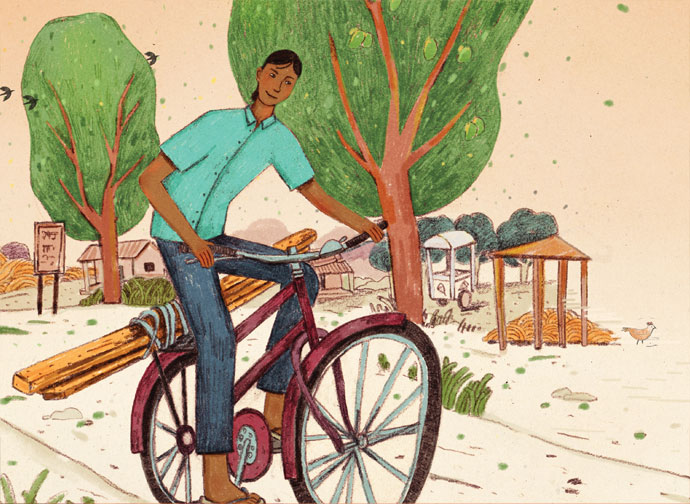
Mankumari Chaudhary, a Dangaura Tharu woman in Kailali, identifies as a woman but is able to fluidly take on the role of a ‘man.’ Her love for another woman, Premila, and her choice not to marry defy traditional gendered expectations. By being unapologetically herself, Mankumari shows the women and girls of Rajuwara what it means to pursue one’s own freedom.
रजुवाराकी छोरी
लेखन : मुना गुरुङ | चित्र : बन्दना तुलाचन
कैलालीको डंगौरा थारू समुदायकी मनकुमारी चौधरीको लैङ्गिक पहिचान महिलाको हो, तर उनी ‘पुरुष’ को भूमिका पनि सजिलैसँग निर्वाह गर्न सक्छिन् । उनले प्रेमिलालाई माया गर्नु र बिहे नगर्ने निर्णय लिनुले परम्परागत लैङ्गिक अपेक्षाहरूको उल्लङ्घन गर्छ । तर मनकुमारी आफू जस्तो छिन् त्यस्तै प्रस्तुत भएर रजुवाराका महिला र बालिकाहरूलाई आफ्नो स्वतन्त्रतालाई पच्छ्याउनुको महत्त्व देखाउँछिन् ।



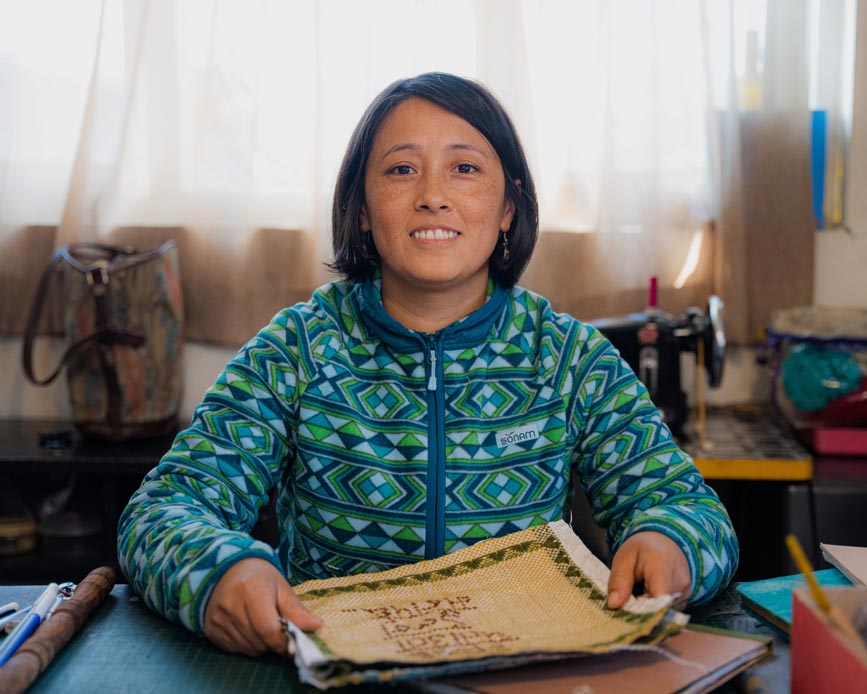
Sunita Maharjan’s practice emerges from a dialogue between human intervention and natural processes. Her work is deeply informed by the spatial imprints of human life — particularly the ways people construct dwellings and draw personal boundaries. By depicting human activity without the human figure, she emphasizes how space is defined by not structures alone, but by the accumulation of time, gestures, and daily rituals.
सुनिता महर्जनको कलाकृति मानवीय हस्तक्षेप र प्राकृतिक प्रक्रियाबीचको संवादबाट उत्पन्न हुन्छ । उनको काम विशेषगरी स्थानमाथि मानव जीवनले बनाउने छापबाट सूचित हुन्छ – विशेषगरि मानिसहरूले आफ्ना बासस्थान कसरी सिर्जना गर्छन र त्यहाँ कसरी व्यक्तिगत सीमा तोक्छन् भन्नेबारे । मान्छेको आकृति बेगरै मानव क्रियाकलाप प्रस्तुत गर्दै उनी स्थानलाई संरचनाले मात्र नभई समय, हाउभाउ र दैनिक संस्कारको संचयनले पनि परिभाषित गर्छन् भन्नेमा जोड दिन्छिन् ।